
The First Totality on Earth for 28 Months…
We’ll Be Broadcasting Live from Spain
As it crosses Spain, the path of totality for this eclipse will be relatively wide: around 290 km (180 miles) across. The path runs through the country from the northern coastline to the Balearic Islands in the Mediterranean—just missing the center of Madrid on one side, and Barcelona on the other.
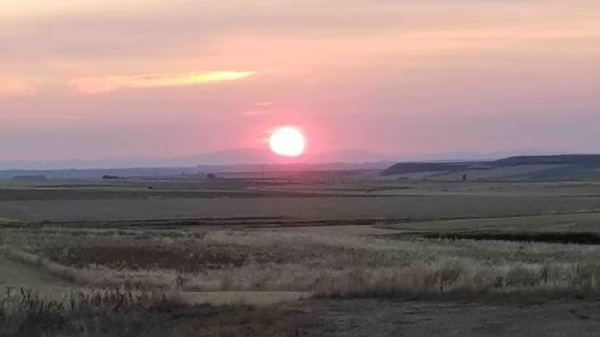
Where will our mungfali.galihkartiwa07.workers.dev live broadcast team be? We’re planning to set up our base near the northwestern city of León. One of our key challenges was to find a location with a clear view to the western horizon, since totality for Spain happens in the evening, with the Sun low in the sky.
See the path of totality on our 3D globeBack to the Mediterranean

Weather permitting, our CEO and Chief Eclipse Chaser Steffen Thorsen will be providing us with a feed from Mallorca. Steffen will be accompanied by Ine Marie, who can often be found moderating our YouTube channel during a live stream.
The words “weather permitting” are important here. The Balearic Islands—Majorca, Minorca, Ibiza, and Formentera—are near the very end of the path of totality on August 12. This means that the Sun will be extremely close to the western horizon at totality.
This means the eclipse could be utterly spectacular! But it also increases the chances of clouds getting in the way: the closer the Sun is to the horizon, the more of Earth’s atmosphere we have to look through in order to see the Sun…
Fun fact: This will be the third time Steffen has done an eclipse live stream from a Mediterranean island. He sent us images of the July 2018 and September 2025 lunar eclipses from Santorini and Cyprus.
Totality at the Top of the World

The path of totality for August 12 passes over the western edge of Iceland, including the country’s biggest city—and the world’s northernmost capital—Reykjavik.
We’re collaborating with Sævar Helgi Bragason, Iceland’s most knowledgeable and passionate science educator on eclipses, the northern lights , and the night sky.
Iceland has a reputation for being cloudy, but Sævar has a positive message for anyone thinking about heading there for this eclipse. “Yes, this is a cloudy place—but we have lots of clear skies, as well as many microclimates,” he says. “The chances are good, especially if you’re mobile.”
Explore our eclipse country page for IcelandLive from Agder County, Norway

We’re excited to be collaborating once again with Steinar Thorvaldsen, Trond Hugo, Steinar Moen, and the Agder Astronomy Society .
The Society will be hosting a public eclipse event at its Tycho Brahe Observatory, near the city of Kristiansand on the southern coast of Norway.
Kristiansand will have an 84% partial eclipse on August 12. First contact—when the Moon takes its first “bite” out of the Sun—is at 19:05 (7:05 pm) local time.
First Light in Kassel
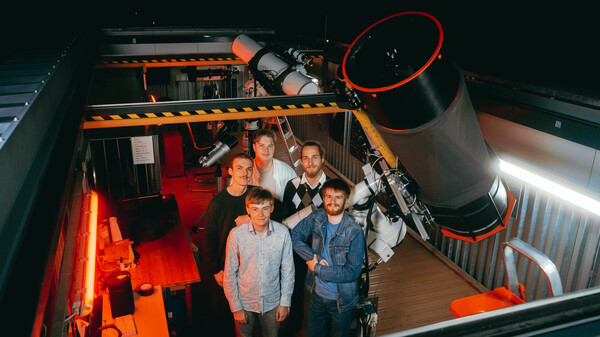
For our friends at the Kassel Astronomy Club in central Germany (Astronomischer Arbeitskreis Kassel , or AAK), August 12 will be first light for a new observatory. (In astronomy, “first light” refers to the first time a piece of equipment captures an image of the sky.)
The AAK operates an observatory in the center of Kassel, but faces the challenge of light pollution and poor seeing conditions. So they decided to relocate part of their equipment to a remote site.
“After considering several options, we chose to restore an old observatory dating back to the 1980s that had been inactive for more than a decade,” says David Spyra. “Our team has been working hard to restore the dome so that the observatory can celebrate its first light in a preliminary operational state just in time for the solar eclipse.”
AAK’s live feed will be organised by David Spyra, Mark Woskowski, Miron Gassert, Florian Hein, and Julian Knatz—who were all involved with our September 2025 live stream. They will be joined by two new team members, Justin Iglhaut and Mark Lorentz.
Eyes on the Sky in Northern Germany

This eclipse will be our first collaboration with Björn Poppe and his colleagues at the University Observatory of Oldenburg in Lower Saxony, Germany. Oldenburg will have an 86% partial eclipse starting at 19:14 (7:14 pm) local time.
The observatory operates and uses a global network of more than 20 robotic instruments—including a mobile Tiny Observatory that brings astronomy directly to schools and public spaces.
Research activities mainly focus on meteor and small-body observations, as well as the detection and characterization of high energetic radiation in space and its interactions. High energetic radiation mainly originates from the Sun, but also from galactic or even extra-galactic sources.
From the Roof of Genoa

The historic port of Genoa, in the Italian region of Liguria, gets a 94% partial eclipse on August 12. But maximum eclipse comes around 10 minutes before sunset—making it a challenging eclipse to observe.
Our friend Walter Riva, at the Righi Astronomical Observatory , has come up with an elegant solution. He’s working with Massimo Saperdi and Edoardo Rossi at the TV station Primocanale .
They’ll be streaming the event from Terrazza Colombo , at the top of a 108-meter (354-foot) skyscraper in downtown Genoa known as the Torre Piacentini.
The View from Canada

We’re excited to be working again with Chris Curwin in Saint John, Eastern Canada. On August 12, he’s co-hosting an astronomy “double header” for the public at Irving Nature Park. He’ll be there as a volunteer and member of the Royal Astronomical Society of Canada (RASC) and as a guest of the Park.
From 13:55 to 15:53 (1:55 pm to 3:53 pm), the Moon will partially eclipse the Sun—weather permitting, Chris’s telescope will capture the view for us. Later, after nightfall, the Perseid Meteor Shower will light up the sky.
Regular viewers may remember Chris from our live stream of the March 2025 solar eclipse—he co-hosts The Sunday Night Astronomy Show on his Astronomy by the Bay Facebook page and YouTube channel . And we’ll be collaborating with him again for the lunar eclipse on August 27–28!
A Bite of the Sun in New York

Kat Troche is another old friend of timeanddate—weather permitting, she’ll be sending us images of a 9% lunchtime partial eclipse over New York City!
Kat is the operations manager for NASA’s Night Sky Network program and a coordinator at the Astro Society (which is holding a virtual 3-day conference at the end of August called Astronomy@250 ).
Beyond her professional activities, Kat is a NASA Solar System Ambassador and president of the Amateur Astronomers Association. A vastly experienced amateur astronomer and informal educator, her previous work includes NASA’s 2024 Total Solar Eclipse broadcast, which earned Kat an Emmy Award and a Webby Award.
Meanwhile at the timeanddate HQ

As well as sending two teams to Spain, timeanddate will be setting up a telescope at its HQ in Stavanger, Norway. Adrianna Opyrchal will be operating a small Seestar telescope—and hoping that the normally cloudy Stavanger will have some clear skies!
“I’ve seen how much equipment my colleagues will be taking on the road to Spain,” says Adrianna. “I think they’re a bit jealous of me for having such a small and lightweight telescope!”
Eclipsing Borders
We’ll also be collaborating once again with Claudia Mignone and our friends at the National Institute for Astrophysics (INAF) in Italy.
INAF does amazing work at communicating astronomy to the public. For this eclipse, they’ve worked with astronomers, science communicators, and educators across various countries to create an interactive slideshow .
“The aim of this project is to collect useful information, existing material, and educational activities to safely enjoy the celestial wonders while learning and having fun,” says Claudia. The work is coordinated by the International Astronomical Union’s Italy-Office of Astronomy for Education and National Outreach Coordinators for Italy.
As part of the Eclipsing Borders project, there is a platform for sharing photos, videos, and other impressions about the eclipse.
Why April 29 Was a Helpful “Dress Rehearsal”

For eclipse-watchers in Spain, a potential snag is that totality will happen at around 20:30 (8:30 pm) local time. This is close to sunset, which means that getting a clear, unobstructed view of the Moon and Sun will be a challenge.
But on the evenings around April 29, eclipse-watchers were able to use an astronomical trick to check their line of sight well in advance.
An astronomical trick for Spain’s 2026 eclipse