The Persian Solar Hijri Calendar
Officially used in Iran and Afghanistan, the Solar Hijri calendar is one of the world’s most accurate calendar systems. It is also known as Persian Calendar, Iranian Calendar, and SH Calendar.
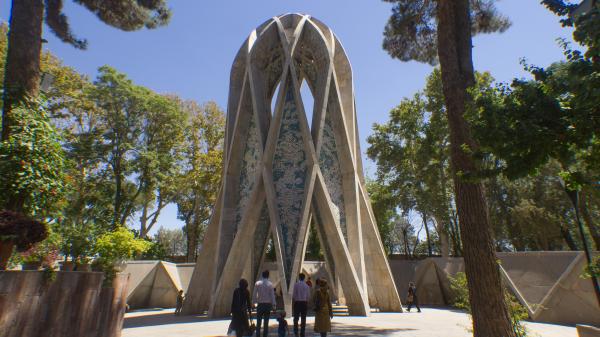
Astronomer Omar Khayyam's tomb.
©bigstockphoto.com/rasoul ali
The Solar Hijri calendar is not to be confused with the Islamic Hijri calendar used in many Muslim countries and by Muslims around the world.
Tied to the Equinox
The Solar Hijri calendar is a solar calendar, meaning that its time reckoning is based on the Earth’s movements around the Sun.
The year begins at midnight closest to the vernal equinox in Iran—specifically at the Iran Standard Time meridian at longitude 52.5° east, which runs about 250 miles (400 km) east of Tehran. The first day of the new year is called Nowruz, and it is celebrated around the world by Iranian people.
Tying the Solar Hijri calendar so closely to the astronomical seasons makes it much more accurate than the Gregorian calendar, which, even in its modern form, deviates from the solar year by 1 day in 3236 years.
How accurate are different calendar systems?
Calendar Structure
Months in the Persian Calendar
| Month Names | Days |
|---|---|
| Farvardin [fæɾvæɾˈdiːn] | 31 |
| Ordibehesht [oɾdiːbeˈheʃt] | 31 |
| Khordad [xoɾˈdɒːd] | 31 |
| Tir [tiːɾ] | 31 |
| Mordad [moɾˈdɒːd] | 31 |
| Shahrivar [ʃæhɾiːˈvæɾ] | 31 |
| Mehr [mehɾ] | 30 |
| Aban [ɒːˈbɒːn] | 30 |
| Azar [ɒːˈzæɾ] | 30 |
| Dey [dei̯] | 30 |
| Bahman [bæhˈmæn] | 30 |
| Esfand [esˈfænd] | 29/30 |
A year in the Solar Hijri calendar is divided into 12 months of varying lengths. The first 6 months have 31 days, and months 7 through 11 have 30 days. The last month, Esfand, has 29 days in a common year and 30 days in a leap year.
When Was Year 1?
The Solar Hijri year count starts with the Islamic prophet Mohammed’s migration (Hegira or Hijrah) to Medina in 622 CE. Although the Solar Hijri calendar shares this start date with the Islamic Hijri calendar, the calendar systems are not related otherwise.
The Hijri calendar is a lunar calendar. Because of this, the year counts between the Solar Hijri calendar and the Hijri calendar differ substantially. For example, January 1, 2026 falls in the year 1404 in the Solar Hijri calendar, which corresponds to year 1447 in the Hijri calendar.
Leap Year Rules
Like in the Gregorian calendar, a common year in the Solar Hijri calendar has 365 days while a leap year has 366 days.
Leap years are determined based on a 33-year cycle, which consists of 25 common years and 8 leap years. In each cycle, the first leap year comes after four common years; thereafter, each leap year is separated by three common years.
In rare cases, the 33-year cycle is shortened to 29 years.
Read more about leap years in the Solar Hijri calendar
History and Background
The Solar Hijri calendar has been Iran’s official calendar since 1925. In Afghanistan, it was introduced in 1957.
The earliest forms of Iranian time reckoning date back as far as the second millennium BCE. A number of different calendar systems were used in Persia through the centuries, including the Zoroastrian calendar and the Islamic calendar. The first version of the modern Solar Hijri calendar, the Jalali calendar, was developed in the 11th century by a group of astronomers including the Persian scientist Omar Khayyam.