
What Are the 7 Days of the Week?
First, let’s get the basics out of the way: The seven days of the week are Monday, Tuesday, Wednesday, Thursday, Friday, Saturday, and Sunday. Read on to find out more about each day.
Following the international standard ISO 8601, we’ll start with Monday—even though roughly half of the world starts their weeks on Sunday.
Monday
Abbreviation: Mon
The first working day of the week in most cultures, Monday tends to have a bit of a bad reputation as a day of tiredness and anxiety. Perhaps that’s the reason why holidays often fall on a Monday, such as Memorial Day in the US and the Spring and Summer Bank Holidays in the UK?
Monday was initially dedicated to the Roman goddess Luna. Fittingly, it is named after the Moon, so it literally means “the Moon’s day”.
More about MondayTuesday
Abbreviation: Tue
This day was traditionally associated with Mars, the Roman god of war and the fourth planet in our solar system. Its English name is derived from the Norse equivalent, Tyr. Curiously, Tuesday is considered an unlucky day in some European cultures, while being a lucky day in Jewish folklore.
More about TuesdayWednesday
Abbreviation: Wed
Marking the middle of the workweek in most countries, Wednesday is also called “Hump Day” in American English. Its name goes back to the Germanic god Wodan .
In many other languages, it is named after the Roman god and planet Mercury: For example, it is called mercredi in French. In German, on the other hand, it has been stripped of all mythological symbolism and is simply called Mittwoch, meaning “midweek”.
More about WednesdayThursday
Abbreviation: Thu
The Norse god of thunder is the inspiration for this day’s name: Thursday literally means “Thor’s day”. It was initially dedicated to the Roman god Jupiter, embodied by the planet of the same name.
More about ThursdayFriday
Abbreviation: Fri
If you live in a country where Saturday and Sunday form the weekend (yes, there are exceptions), you are surely familiar with the expression “Thank God it’s Friday!” As the last day of the workweek, the day comes with a vibe of joyous anticipation (unless it falls on the 13th).
The only question is which god you should thank. Going only by its name, it should be Frigg, the Norse goddess of fertility and love—or perhaps the Roman equivalent, Venus.
More about FridaySaturday
Abbreviation: Sat
This day is named after, you guessed it, Saturn. Saturday is the only day of the week whose English name still betrays its initial link to a Roman deity: Saturn, the god of agriculture and time.
In most countries, Saturday is the first day of the weekend, but in many predominantly Muslim cultures, it is the second weekend day, after Friday. In Nepal, it is the only sanctioned weekend day.
More about SaturdaySunday
Abbreviation: Sun
Speaking of obvious name origins, Sunday is, quite unsurprisingly, the “day of the Sun”. It is the last day of the week according to the international standard ISO 8601—but many countries define it as the first day of the week.
More about Sunday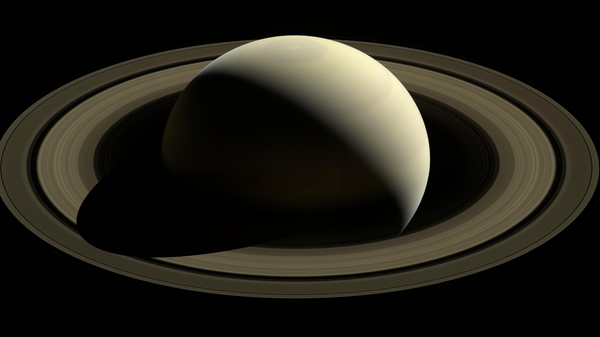
Why Seven Days—and Why in That Order?
The origin of the day names is interesting, but the history of the week itself is where it gets truly fascinating.
The ancient Babylonians first divided the lunar month into four bite-sized portions, each lasting seven days.
When the ancient Romans adopted this system, they dedicated each day of the week to one of their deities. Each deity was associated with one of the classical planets , and it was believed that each hour of the day was governed by one of them, in the order of their presumed distance from Earth. This, in turn, produced a complex cycle of planetary hours , which was the basis for the order of the days we still use today.
Read our article about the origin of the 7-day week for a more thorough, visual explanation—and to learn why Tuesday, Wednesday, and Thursday aren’t called Marsday, Mercuryday, and Jupiterday.
Find planets in your night skyDoes the Week Actually Start on Sunday?
According to the international standard ISO 8601, Monday is the first day of the week. What’s more, most of the world’s countries follow that convention.
But did you know that, globally, more people start the week on Sunday? That includes the populations of almost all countries in North and South America and about half of the African and Asian states.
Our calendar expert has crunched the numbers and plugged them into a world map—check out his article.
When Is the Weekend?
Just as the first day of the week varies across cultures, so does the weekend. In many Christian-majority countries, Sunday has traditionally been the principal day of rest and worship; for Muslims, Friday holds special religious significance; while in Judaism, Saturday—the Sabbath—fulfills that role.
On that basis, most countries observe the weekend on Saturday and Sunday, while it runs from Friday to Saturday in many predominantly Muslim countries, as well as in Israel.
But did you know that the weekend in some countries runs from Thursday to Friday—and others even confine it to only Saturday or only Sunday? Read our article about the weekend to get a global perspective on weekly days of rest.

Most (But Not All) Years Have 52 Weeks
In many countries, it is customary to use week numbers to pinpoint a specific week within the year. According to ISO 8601, week 1 is the first week of the year containing a Thursday. On a global scale, however, this convention is not followed universally.
A common year has 365 days, which equals 52 weeks plus 1 day; a leap year has 366 days, or 52 weeks plus 2 days. So, a year normally contains 52 full weeks.
That said, when a common year starts on a Thursday or a leap year starts on a Wednesday, the week count goes up to 53. This is because the Thursday of the week following week 52 falls before New Year’s Day, so the first week with a Thursday in the new year (week 1) is the week after—see an example.
Calculate the week number for any dateHow Other Languages Name Their Days
English and many Romance languages still use the ancient planetary system.
However, in many other languages, such as Hebrew and Arabic, days are numbered, their names reflecting their position within the week. For example, Monday is named Yom Rishon in Hebrew and al-Ithnayn in Arabic, identifying it as the second day.
Portuguese is an example of a Romance language that also uses the numbering system for the days from Monday (segunda-feira, the second day) to Friday (sexta-feira, the sixth day).
In Japanese, the days are named after the Sun, Moon, and five elements associated with the planets: fire, water, wood, metal, and earth.
Hooked on Calendar Trivia?
Our articles on the 12 months of the year are another fascinating read. You can also find out why centuries begin with years ending with 1 while decades do not, and why even the world’s most precise calendar isn’t perfect.
Or explore the world’s various calendar systems to find out how other cultures keep track of time: