
Aurora Alert: Major X-Flares and an Incoming CME
After a burst of intense solar activity, the northern lights could glow farther from the usual polar regions around February 5.

Eid Milad-un-Nabi, also known as the Prophet Muhammad’s birthday, is a public holiday in Pakistan. Sunni Muslims observe Milad-un-Nabi on 12 Rabi-ul-Awwal (third month of the Islamic calendar) while Shia Muslims observe it on 17 Rabi-ul-Awwal, coinciding with the birthdate of their sixth Imam Jafar-al-Sadiq.
Eid Milad un-Nabi is a public holiday. It is a day off for the general population, and schools and most businesses are closed.
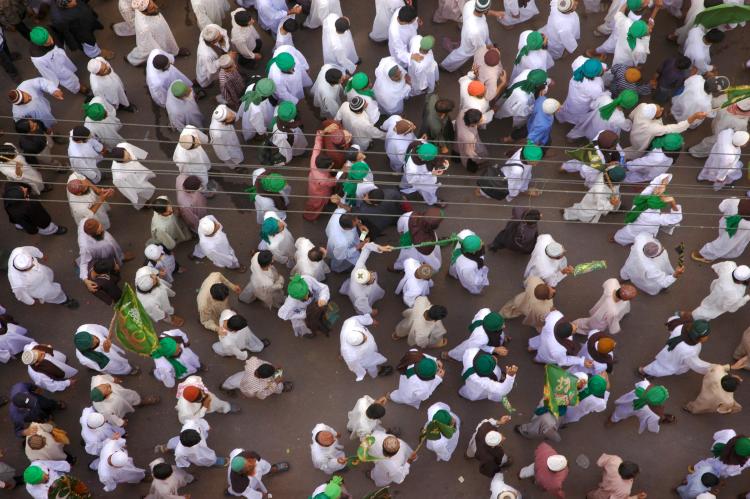
Pictured above is a group of Muslims in Karachi, Pakistan, in procession for the Prophet Muhammad's birthday.
©iStockphoto.com/ameer_great
Milad-un-Nabi observances differ among people following different schools of Islamic Jurisprudence (Fiqh). Some scholars forbid celebrations and even challenge the holiday’s legality in light of Sharia (Islamic law). Many Muslims do not believe in celebrating birthdays or anniversaries as there is no evidence from Prophet Mohammad’s life of such observances. On the other hand, many Islamic scholars believe that this day should be celebrated festively. There is a considerable number of Muslims that observe this day with utmost religious fervor.
The day starts off with an official 31-gun salute at the federal capital and a 21-gun salute in provincial headquarters. The national flag is hoisted on all major public buildings, governmental, non-governmental facilities, mosques and even households are tastefully decorated and colorfully illuminated at night.
Seerat conferences are organized at both federal and provincial levels where religious scholars and intellectuals come and shed light on the Prophet Muhammed’s life, sayings, teachings and philosophies. Naat (poetry written in praise of the Prophet) and Koran recitation competitions are also held where prizes are distributed among people who perform outstandingly in the above stated disciplines.
Many people also donate to charity. Food and sweets are distributed among the poor and the needy. Moreover, contributions are made to support orphanages, asylums for the physically and mentally challenged, and widows.
Special prayers are offered at mosques. Religious leaders and scholars preach the Prophet Muhammed’s teachings. Stories and incidents from his life of morals, such as forgiveness, kindheartedness, bravery, wisdom, honesty, and peace lovingness, are quoted.
Milad-un-Nabi congregations, rallies and processions also take place in major cities across Pakistan. These processions usually start from a central location (central mosques or locations of public prominence), pass through designated routes, and end at the starting point.
Eid Milad-un-Nabi is a public holiday in Pakistan. All government and semi government offices, and most private offices, businesses, shopping malls, post offices and educational institutions are closed on this day.
Those wishing to travel via public transport on the day will need to contact the local transport authorities on the public transport availability. Traffic may be disrupted because of Milad-un-Nabi processions on major routes.
The first public celebrations of Milad-un-Nabi occurred in Egypt towards the end of the 11th century. It was primarily a festival of the Shia ruling class. The celebrations featured Koran recitations, animal sacrifices, public sermons and feasts.
The first public observance of Milad-un-Nabi by Sunnis took place in 12th century in Syria under the rule of Noor-un-Din Zangi. In 1910 it was given the official status as a national festival throughout the Ottoman Empire. Milad-un-Nabi is now an official holiday in many Muslim countries throughout the world.
Green colored pennants are often seen during Milad-un-Nabi processions, on shrines and mosques. Green is a color associated with the Prophet as being one of his favored colors. It is said that the Prophet chose a green colored flag to represent the Islamic republic during his life. Candles and oil lamps (Chiragan) are lit on the eve of 12 Rabi-ul-Awwal to welcome the Prophet’s arrival and to celebrate his birth.
Muslims use a lunar calendar which differs in length from the Gregorian calendar used worldwide. This means the Gregorian date of Muslim holidays shifts slightly from one year to the next, falling about 11 days earlier each year.
Holiday currently only shown for years 2005–2026.
Note: During a public holiday, government offices and most businesses are closed so people have a day off work.
| Year | Weekday | Date | Name | Holiday Type |
|---|---|---|---|---|
| 2005 | Fri | Apr 22 | Eid Milad un-Nabi | Public Holiday |
| 2006 | Tue | Apr 11 | Eid Milad un-Nabi | Public Holiday |
| 2007 | Sat | Mar 31 | Eid Milad un-Nabi | Public Holiday |
| 2008 | Fri | Mar 21 | Eid Milad un-Nabi | Public Holiday |
| 2009 | Mon | Mar 9 | Eid Milad un-Nabi | Public Holiday |
| 2010 | Mon | Mar 1 | Eid Milad un-Nabi | Public Holiday |
| 2011 | Thu | Feb 17 | Eid Milad un-Nabi | Public Holiday |
| 2012 | Sun | Feb 5 | Eid Milad un-Nabi | Public Holiday |
| 2013 | Thu | Jan 24 | Eid Milad un-Nabi | Public Holiday |
| 2014 | Tue | Jan 14 | Eid Milad un-Nabi | Public Holiday |
| 2015 | Sun | Jan 4 | Eid Milad un-Nabi | Public Holiday |
| 2016 | Mon | Dec 12 | Eid Milad un-Nabi | Public Holiday |
| 2017 | Fri | Dec 1 | Eid Milad un-Nabi | Public Holiday |
| 2018 | Wed | Nov 21 | Eid Milad un-Nabi | Public Holiday |
| 2019 | Sun | Nov 10 | Eid Milad un-Nabi | Public Holiday |
| 2020 | Fri | Oct 30 | Eid Milad un-Nabi | Public Holiday |
| 2021 | Tue | Oct 19 | Eid Milad un-Nabi | Public Holiday |
| 2022 | Sun | Oct 9 | Eid Milad un-Nabi | Public Holiday |
| 2023 | Fri | Sep 29 | Eid Milad un-Nabi | Public Holiday |
| 2024 | Tue | Sep 17 | Eid Milad un-Nabi | Public Holiday |
| 2025 | Sat | Sep 6 | Eid Milad un-Nabi | Public Holiday |
| 2026 | Tue | Aug 25 | Eid Milad un-Nabi (Tentative Date) | Public Holiday |
While we diligently research and update our holiday dates, some of the information in the table above may be preliminary. If you find an error, please let us know.
After a burst of intense solar activity, the northern lights could glow farther from the usual polar regions around February 5.
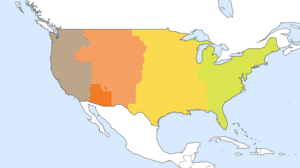
Most of the United States begins Daylight Saving Time (DST) on Sunday, March 8, 2026. A new poll shows only 12% support the current system.

What’s up in the day and night sky in February 2026, including a string of close Moon-planet meetups and an annular solar eclipse.

Discover the phases of the Moon in February 2026. Also: Will the crew of Artemis II fly around the Moon in February?