
Mar 14, 2027, 2:00 am
In some areas of Canada
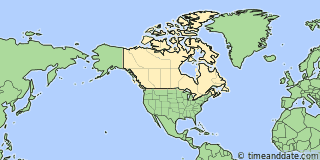

Note: Only some parts of Canada used DST in 1955.
Apr 24
Forward 1 hour
Apr 24, 1955 - Daylight Saving Time Started
When local standard time was about to reach
Sunday, April 24, 1955, 2:00:00 am clocks were turned forward 1 hour to
Sunday, April 24, 1955, 3:00:00 am local daylight time instead.
Sunrise and sunset were about 1 hour later on Apr 24, 1955 than the day before. There was more light in the evening and less light in the morning.
Also called Spring Forward, Summer Time, and Daylight Savings Time.
Sep 25
Back 1 hour
Sep 25, 1955 - Daylight Saving Time Ended
When local daylight time was about to reach
Sunday, September 25, 1955, 2:00:00 am clocks were turned backward 1 hour to
Sunday, September 25, 1955, 1:00:00 am local standard time instead.
Sunrise and sunset were about 1 hour earlier on Sep 25, 1955 than the day before. There was more light in the morning and less light in the evening.
Also called Fall Back and Winter Time.
Other years: 2026
When Does DST Start and End in Canada?
Daylight Saving Time (DST) in Canada starts on the 2nd Sunday in March and ends on the 1st Sunday in November.
Which Provinces and Territories use Daylight Saving Time in 1955

Areas in Canada on standard time all of 1955
Which Provinces and Territories in Canada don't use DST?
Yukon, most of Saskatchewan, some locations in Québec east of 63° westerly longitude (e.g. Blanc-Sablon), Southampton Island, and some areas in British Columbia don't use DST and stay on standard time all year. See table below.
DST in Provinces and Territories in Canada in 1955
|
|||||
|---|---|---|---|---|---|
| Alberta | No DST | Northwest Territories | No DST | Quebec (east, island) | No DST |
| British Columbia | Apr 24 – Sep 25 | Nova Scotia | No DST | Quebec | Apr 24 – Sep 25 |
| British Columbia (southeast, southeast) | No DST | Nunavut | No DST | Saskatchewan | Apr 24 – Sep 25 |
| Manitoba | Apr 24 – Sep 25 | Ontario (northwest, south) | No DST | Saskatchewan (west) | No DST |
| New Brunswick | Apr 24 – Sep 25 | Ontario | Apr 24 – Sep 25 | Yukon | No DST |
| Newfoundland and Labrador | Apr 24 – Sep 25 | Prince Edward Island | No DST | ||
Daylight Saving Time History in Canada
- Canada first observed Daylight Saving Time in 1908.
- Canada has observed DST for 112 years between 1908 and 2026 (DST in at least one location).
- Previous time with no Daylight Saving Time was 1915.
- See Worldwide DST Statistics
On July 1, 1908, the residents of Port Arthur, Ontario, today's Thunder Bay, turned their clocks forward by 1 hour to start the world's first DST period. Other locations in Canada soon followed suit. On April 23, 1914, Regina in Saskatchewan implemented DST. The cities of Winnipeg and Brandon in Manitoba did so on April 24, 1916.
DST in Canada Today
It is up to the legislation in each municipality in Canada to decide on the use of DST. As a result, there are some locations that don’t follow the DST schedule of their provinces and territories. For example, while British Columbia uses DST, some locations in the province do not. These include Chetwynd, Creston, Dawson Creek, Fort Nelson, and Fort St. John. In Saskatchewan, it is the opposite. Most of the province does not observe DST, except for some locations, including Creighton and Denare Beach. From March 8, 2020, Yukon made DST permanent.
Since 2007, all provinces, territories, and locations in Canada using DST follow the same start and end dates as the United States.