
| Current Time: | Nov 26, 2026 at 12:23:45 am |
|---|---|
| Moon Direction: | ↑ 67° East |
| Moon Altitude: | 64.5° |
| Moon Distance: | 223,336 mi |
| Next New Moon: | Dec 8, 2026, 8:51 pm |
| Next Full Moon: | Dec 23, 2026, 9:28 pm |
| Next Moonset: | Today, 9:14 am |


Moonrise, Moonset, and Phase Calendar for 19°47'18.6"N, 71°46'03.1"W, January 2026
Scroll right to see more
| 2026 | Moonrise/Moonset | Meridian Passing | ||||||||
|---|---|---|---|---|---|---|---|---|---|---|
| Jan | Moonrise | Moonset | Moonrise | Time | Distance (mi) | Illumination | ||||
| 1 | - | 5:26 am | ↑ (299°) | 4:30 pm | ↑ (60°) | 11:32 pm | (81.4°) | 223,941 | 97.5% | |
| 2 | - | 6:35 am | ↑ (300°) | 5:37 pm | ↑ (60°) | Moon does not pass the meridian on this day. | ||||
 3 |
- | 7:38 am | ↑ (299°) | 6:46 pm | ↑ (63°) | 12:39 am | (82.1°) | 224,796 | 99.8% | |
| 4 | - | 8:34 am | ↑ (295°) | 7:53 pm | ↑ (67°) | 1:42 am | (85.0°) | 226,774 | 98.9% | |
| 5 | - | 9:22 am | ↑ (290°) | 8:56 pm | ↑ (73°) | 2:40 am | (89.6°) | 229,694 | 95.2% | |
| 6 | - | 10:04 am | ↑ (284°) | 9:54 pm | ↑ (79°) | 3:33 am | (84.7°) | 233,265 | 89.1% | |
| 7 | - | 10:41 am | ↑ (277°) | 10:48 pm | ↑ (86°) | 4:20 am | (78.5°) | 237,150 | 81.2% | |
| 8 | - | 11:15 am | ↑ (271°) | 11:40 pm | ↑ (93°) | 5:04 am | (72.1°) | 241,008 | 72.1% | |
| 9 | - | 11:48 am | ↑ (264°) | - | 5:46 am | (65.9°) | 244,544 | 62.3% | ||
 10 |
12:30 am | ↑ (99°) | 12:20 pm | ↑ (258°) | - | 6:27 am | (59.9°) | 247,522 | 52.3% | |
| 11 | 1:20 am | ↑ (105°) | 12:54 pm | ↑ (253°) | - | 7:09 am | (54.5°) | 249,783 | 42.4% | |
| 12 | 2:11 am | ↑ (110°) | 1:31 pm | ↑ (248°) | - | 7:53 am | (49.8°) | 251,243 | 33.0% | |
| 13 | 3:03 am | ↑ (114°) | 2:11 pm | ↑ (244°) | - | 8:38 am | (45.9°) | 251,887 | 24.2% | |
| 14 | 3:57 am | ↑ (118°) | 2:55 pm | ↑ (241°) | - | 9:27 am | (43.1°) | 251,765 | 16.4% | |
| 15 | 4:51 am | ↑ (120°) | 3:44 pm | ↑ (240°) | - | 10:18 am | (41.5°) | 250,973 | 9.9% | |
| 16 | 5:44 am | ↑ (120°) | 4:37 pm | ↑ (240°) | - | 11:10 am | (41.4°) | 249,643 | 4.8% | |
| 17 | 6:34 am | ↑ (119°) | 5:33 pm | ↑ (242°) | - | 12:03 pm | (42.7°) | 247,920 | 1.5% | |
 18 |
7:22 am | ↑ (117°) | 6:29 pm | ↑ (245°) | - | 12:54 pm | (45.5°) | 245,946 | 0.1% | |
| 19 | 8:05 am | ↑ (113°) | 7:26 pm | ↑ (250°) | - | 1:44 pm | (49.5°) | 243,842 | 0.9% | |
| 20 | 8:45 am | ↑ (107°) | 8:21 pm | ↑ (255°) | - | 2:31 pm | (54.6°) | 241,696 | 3.9% | |
| 21 | 9:22 am | ↑ (101°) | 9:15 pm | ↑ (262°) | - | 3:16 pm | (60.5°) | 239,559 | 9.1% | |
| 22 | 9:57 am | ↑ (95°) | 10:09 pm | ↑ (269°) | - | 4:01 pm | (66.9°) | 237,457 | 16.3% | |
| 23 | 10:32 am | ↑ (88°) | 11:04 pm | ↑ (276°) | - | 4:45 pm | (73.6°) | 235,402 | 25.3% | |
| 24 | 11:08 am | ↑ (81°) | - | - | 5:32 pm | (80.2°) | 233,412 | 35.7% | ||
| 25 | - | 12:01 am | ↑ (282°) | 11:46 am | ↑ (74°) | 6:21 pm | (86.4°) | 231,531 | 47.1% | |
 26 |
- | 1:00 am | ↑ (289°) | 12:30 pm | ↑ (69°) | 7:14 pm | (88.2°) | 229,841 | 58.8% | |
| 27 | - | 2:04 am | ↑ (294°) | 1:19 pm | ↑ (64°) | 8:12 pm | (84.1°) | 228,473 | 70.3% | |
| 28 | - | 3:10 am | ↑ (298°) | 2:15 pm | ↑ (61°) | 9:15 pm | (81.7°) | 227,587 | 80.7% | |
| 29 | - | 4:17 am | ↑ (300°) | 3:17 pm | ↑ (60°) | 10:20 pm | (81.4°) | 227,354 | 89.4% | |
| 30 | - | 5:21 am | ↑ (300°) | 4:24 pm | ↑ (61°) | 11:23 pm | (83.3°) | 227,905 | 95.7% | |
| 31 | - | 6:19 am | ↑ (297°) | 5:31 pm | ↑ (65°) | Moon does not pass the meridian on this day. | ||||
| * All times are local time for 19°47'18.6"N, 71°46'03.1"W. They take into account refraction. Dates are based on the Gregorian calendar. Illumination is calculated at lunar noon. | ||||||||||
Jan | Feb | Mar | Apr | May | Jun | Jul | Aug | Sep | Oct | Nov | Dec
Elsewhere on mungfali.galihkartiwa07.workers.dev

Venus at Peak Brightness
Venus is gearing up for its brightest act of 2026. Find out when and where to see it.

Greenland returns to UTC-3 in 2027
Greenland returns to UTC-3 on October 31, 2027, setting clocks back two hours. The decision follows years of public opposition to the 2023 change.

Sky Guide for November 2026
The planets are putting on a show this month. Up next, Mercury and Venus meet up in the pre-dawn sky.
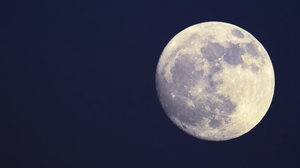
Full Moon Phase: How Does It Work?
The third primary phase of the Moon is the Full Moon.