
| Current Time: | Nov 19, 2026 at 6:12:44 am |
|---|---|
| Moon Direction: | ↑ 316° Northwest |
| Moon Altitude: | -36.4° |
| Moon Distance: | 242,095 mi |
| Next Full Moon: | Nov 24, 2026, 7:53 pm |
| Next New Moon: | Dec 9, 2026, 5:51 am |
| Next Moonrise: | Today, 2:57 pm |
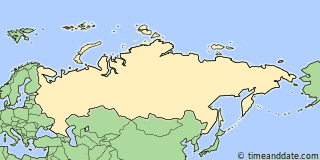

Moonrise, Moonset, and Phase Calendar for Shibynda, May 2026
Scroll right to see more
| 2026 | Moonrise/Moonset | Meridian Passing | ||||||||
|---|---|---|---|---|---|---|---|---|---|---|
| May | Moonrise | Moonset | Moonrise | Time | Distance (mi) | Illumination | ||||
 1 |
- | 5:17 am | ↑ (244°) | 8:52 pm | ↑ (122°) | 12:33 am | (23.1°) | 248,443 | 99.1% | |
| 2 | - | 5:35 am | ↑ (236°) | 10:05 pm | ↑ (129°) | 1:18 am | (18.4°) | 249,954 | 99.8% | |
| 3 | - | 5:57 am | ↑ (229°) | 11:16 pm | ↑ (134°) | 2:05 am | (14.6°) | 251,132 | 98.6% | |
| 4 | - | 6:28 am | ↑ (224°) | - | 2:54 am | (11.9°) | 251,903 | 95.5% | ||
| 5 | 12:19 am | ↑ (138°) | 7:09 am | ↑ (222°) | - | 3:45 am | (10.5°) | 252,177 | 90.6% | |
| 6 | 1:13 am | ↑ (138°) | 8:02 am | ↑ (222°) | - | 4:36 am | (10.5°) | 251,861 | 84.2% | |
| 7 | 1:54 am | ↑ (136°) | 9:05 am | ↑ (226°) | - | 5:27 am | (11.9°) | 250,876 | 76.5% | |
| 8 | 2:24 am | ↑ (131°) | 10:16 am | ↑ (231°) | - | 6:17 am | (14.6°) | 249,175 | 67.7% | |
| 9 | 2:47 am | ↑ (124°) | 11:30 am | ↑ (238°) | - | 7:04 am | (18.4°) | 246,756 | 58.0% | |
 10 |
3:05 am | ↑ (116°) | 12:46 pm | ↑ (247°) | - | 7:50 am | (23.2°) | 243,679 | 47.8% | |
| 11 | 3:20 am | ↑ (107°) | 2:02 pm | ↑ (257°) | - | 8:34 am | (28.9°) | 240,077 | 37.3% | |
| 12 | 3:33 am | ↑ (98°) | 3:20 pm | ↑ (267°) | - | 9:19 am | (35.1°) | 236,156 | 27.1% | |
| 13 | 3:46 am | ↑ (88°) | 4:41 pm | ↑ (278°) | - | 10:05 am | (41.8°) | 232,194 | 17.7% | |
| 14 | 4:00 am | ↑ (77°) | 6:06 pm | ↑ (289°) | - | 10:53 am | (48.6°) | 228,521 | 9.6% | |
| 15 | 4:16 am | ↑ (67°) | 7:36 pm | ↑ (299°) | - | 11:45 am | (55.0°) | 225,488 | 3.7% | |
| 16 | 4:38 am | ↑ (57°) | 9:10 pm | ↑ (309°) | - | 12:43 pm | (60.6°) | 223,412 | 0.6% | |
 17 |
5:08 am | ↑ (49°) | 10:40 pm | ↑ (315°) | - | 1:45 pm | (64.7°) | 222,523 | 0.6% | |
| 18 | 5:52 am | ↑ (44°) | 11:58 pm | ↑ (318°) | - | 2:52 pm | (66.8°) | 222,904 | 4.0% | |
| 19 | 6:55 am | ↑ (42°) | - | - | 3:59 pm | (66.5°) | 224,476 | 10.4% | ||
| 20 | - | 12:55 am | ↑ (316°) | 8:14 am | ↑ (46°) | 5:03 pm | (64.0°) | 227,009 | 19.1% | |
| 21 | - | 1:34 am | ↑ (310°) | 9:41 am | ↑ (53°) | 6:01 pm | (59.9°) | 230,191 | 29.4% | |
| 22 | - | 2:00 am | ↑ (302°) | 11:08 am | ↑ (62°) | 6:54 pm | (54.6°) | 233,698 | 40.5% | |
 23 |
- | 2:19 am | ↑ (293°) | 12:30 pm | ↑ (71°) | 7:41 pm | (48.6°) | 237,242 | 51.7% | |
| 24 | - | 2:34 am | ↑ (283°) | 1:48 pm | ↑ (81°) | 8:26 pm | (42.4°) | 240,603 | 62.4% | |
| 25 | - | 2:47 am | ↑ (273°) | 3:03 pm | ↑ (91°) | 9:08 pm | (36.2°) | 243,630 | 72.3% | |
| 26 | - | 2:59 am | ↑ (264°) | 4:16 pm | ↑ (101°) | 9:50 pm | (30.2°) | 246,236 | 81.0% | |
| 27 | - | 3:11 am | ↑ (255°) | 5:28 pm | ↑ (110°) | 10:32 pm | (24.7°) | 248,385 | 88.2% | |
| 28 | - | 3:24 am | ↑ (246°) | 6:41 pm | ↑ (119°) | 11:16 pm | (19.8°) | 250,074 | 93.8% | |
| 29 | - | 3:41 am | ↑ (238°) | 7:54 pm | ↑ (127°) | Moon does not pass the meridian on this day. | ||||
| 30 | - | 4:02 am | ↑ (231°) | 9:05 pm | ↑ (133°) | 12:02 am | (15.7°) | 251,313 | 97.6% | |
|
31 |
- | 4:29 am | ↑ (226°) | 10:11 pm | ↑ (137°) | 12:50 am | (12.7°) | 252,115 | 99.6% | |
| * All times are local time for Shibynda. They take into account refraction. Dates are based on the Gregorian calendar. Illumination is calculated at lunar noon. | ||||||||||
Jan | Feb | Mar | Apr | May | Jun | Jul | Aug | Sep | Oct | Nov | Dec
Elsewhere on mungfali.galihkartiwa07.workers.dev

Look Up for the Leonids
The Leonids come with a bonus this year: A Mars-Jupiter close approach will be visible near the meteor shower’s radiant. Find out when and where to see them.

Sky Guide for November 2026
The planets are putting on a show this month. Up next, Mars and Jupiter meet in the sky.

The Moon in November 2026
Discover the phases of the Moon in November 2026, including a brand new Supermoon.

Full Moon Phase: How Does It Work?
The third primary phase of the Moon is the Full Moon.