
| Current Time: | Nov 14, 2026 at 2:32:06 am |
|---|---|
| Moon Direction: | ↑ 205° Southwest |
| Moon Altitude: | -16.8° |
| Moon Distance: | 252,041 mi |
| Next Full Moon: | Nov 25, 2026, 1:53 am |
| Next New Moon: | Dec 9, 2026, 11:51 am |
| Next Moonrise: | Today, 8:45 am |
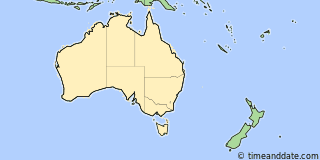

Moonrise, Moonset, and Phase Calendar for Hobart, April 2026
| 2026 | Moonrise/Moonset | Meridian Passing | ||||||||
|---|---|---|---|---|---|---|---|---|---|---|
| Apr | Moonrise | Moonset | Moonrise | Time | Distance (mi) | Illumination | ||||
| 1 | - | 6:15 am | ↑ (270°) | 6:27 pm | ↑ (94°) | 12:05 am | (44.7°) | 241,288 | 97.5% | |
 2 |
- | 7:22 am | ↑ (262°) | 6:46 pm | ↑ (102°) | 12:48 am | (51.0°) | 243,477 | 99.7% | |
| 3 | - | 8:28 am | ↑ (254°) | 7:07 pm | ↑ (110°) | 1:31 am | (57.1°) | 245,634 | 99.6% | |
| 4 | - | 9:34 am | ↑ (246°) | 7:30 pm | ↑ (117°) | 2:14 am | (62.6°) | 247,654 | 97.5% | |
| 5 | - | 9:40 am | ↑ (240°) | 6:58 pm | ↑ (123°) | 2:59 am | (67.4°) | 249,404 | 93.5% | |
| Note: hours shift because clocks change backward 1 hour. (See the note below this table for details) | ||||||||||
| 6 | - | 10:45 am | ↑ (234°) | 7:31 pm | ↑ (127°) | 2:46 am | (71.1°) | 250,737 | 87.8% | |
| 7 | - | 11:47 am | ↑ (231°) | 8:12 pm | ↑ (130°) | 3:36 am | (73.8°) | 251,503 | 80.7% | |
| 8 | - | 12:43 pm | ↑ (230°) | 9:02 pm | ↑ (130°) | 4:27 am | (75.1°) | 251,575 | 72.5% | |
| 9 | - | 1:31 pm | ↑ (231°) | 9:59 pm | ↑ (128°) | 5:18 am | (74.9°) | 250,862 | 63.3% | |
 10 |
- | 2:11 pm | ↑ (234°) | 11:03 pm | ↑ (125°) | 6:09 am | (73.4°) | 249,328 | 53.6% | |
| 11 | - | 2:44 pm | ↑ (239°) | - | 6:59 am | (70.5°) | 247,007 | 43.6% | ||
| 12 | 12:10 am | ↑ (119°) | 3:12 pm | ↑ (245°) | - | 7:47 am | (66.4°) | 244,007 | 33.6% | |
| 13 | 1:19 am | ↑ (112°) | 3:36 pm | ↑ (252°) | - | 8:34 am | (61.2°) | 240,510 | 24.1% | |
| 14 | 2:29 am | ↑ (104°) | 3:57 pm | ↑ (261°) | - | 9:20 am | (55.2°) | 236,767 | 15.4% | |
| 15 | 3:40 am | ↑ (95°) | 4:18 pm | ↑ (270°) | - | 10:06 am | (48.6°) | 233,078 | 8.2% | |
| 16 | 4:54 am | ↑ (86°) | 4:40 pm | ↑ (279°) | - | 10:53 am | (41.6°) | 229,762 | 3.0% | |
 17 |
6:10 am | ↑ (76°) | 5:03 pm | ↑ (288°) | - | 11:43 am | (34.8°) | 227,122 | 0.3% | |
| 18 | 7:30 am | ↑ (67°) | 5:32 pm | ↑ (296°) | - | 12:36 pm | (28.4°) | 225,395 | 0.7% | |
| 19 | 8:53 am | ↑ (59°) | 6:08 pm | ↑ (304°) | - | 1:34 pm | (23.2°) | 224,716 | 4.2% | |
| 20 | 10:15 am | ↑ (53°) | 6:54 pm | ↑ (309°) | - | 2:37 pm | (19.6°) | 225,091 | 10.6% | |
| 21 | 11:31 am | ↑ (50°) | 7:52 pm | ↑ (310°) | - | 3:42 pm | (18.1°) | 226,404 | 19.4% | |
| 22 | 12:34 pm | ↑ (50°) | 9:01 pm | ↑ (309°) | - | 4:46 pm | (18.7°) | 228,441 | 29.9% | |
| 23 | 1:23 pm | ↑ (54°) | 10:17 pm | ↑ (304°) | - | 5:47 pm | (21.3°) | 230,953 | 41.4% | |
 24 |
2:01 pm | ↑ (59°) | 11:34 pm | ↑ (298°) | - | 6:43 pm | (25.4°) | 233,700 | 53.0% | |
| 25 | 2:30 pm | ↑ (67°) | - | - | 7:34 pm | (30.6°) | 236,491 | 64.1% | ||
| 26 | - | 12:48 am | ↑ (290°) | 2:53 pm | ↑ (75°) | 8:20 pm | (36.5°) | 239,192 | 74.2% | |
| 27 | - | 1:58 am | ↑ (282°) | 3:14 pm | ↑ (83°) | 9:04 pm | (42.7°) | 241,726 | 83.0% | |
| 28 | - | 3:06 am | ↑ (273°) | 3:33 pm | ↑ (91°) | 9:46 pm | (49.0°) | 244,052 | 90.1% | |
| 29 | - | 4:12 am | ↑ (265°) | 3:52 pm | ↑ (99°) | 10:28 pm | (55.1°) | 246,150 | 95.3% | |
| 30 | - | 5:17 am | ↑ (256°) | 4:12 pm | ↑ (107°) | 11:11 pm | (60.7°) | 248,007 | 98.6% | |
| * All times are local time for Hobart. Time is adjusted for DST when applicable. They take into account refraction. Dates are based on the Gregorian calendar. Illumination is calculated at lunar noon. | ||||||||||
Note that Daylight Saving Time ends on Sunday, April 5, 2026 at 3:00 am, and this is accounted for above.
Jan | Feb | Mar | Apr | May | Jun | Jul | Aug | Sep | Oct | Nov | Dec
Elsewhere on mungfali.galihkartiwa07.workers.dev

Look Up for the Leonids
The Leonids come with a bonus this year: A Mars-Jupiter close approach will be visible near the meteor shower’s radiant. Find out when and where to see them.

Sky Guide for November 2026
What’s up in the sky in November, including Mars and Jupiter cozying up, a scattering of shooting stars, a recognizable constellation, and a Supermoon.

The Moon in November 2026
The almost New Moon appears close to Venus in the early-morning sky. Some observers will even see an occultation.

Waning Crescent Moon
During the Waning Crescent Moon phase, the lit-up part of the Waning Moon shrinks from the Third Quarter Moon until it disappears from view at New Moon.