
| Current Time: | Dec 19, 2025 at 10:47:54 am |
|---|---|
| Moon Direction: | ↑ 165° South |
| Moon Altitude: | 13.4° |
| Moon Distance: | 251,409 mi |
| Next New Moon: | Dec 20, 2025, 2:43 am |
| Next Full Moon: | Jan 3, 2026, 11:02 am |
| Next Moonset: | Today, 3:48 pm |


Moonrise, Moonset, and Phase Calendar for Sion, May 2025
Scroll right to see more
| 2025 | Moonrise/Moonset | Meridian Passing | ||||||||
|---|---|---|---|---|---|---|---|---|---|---|
| May | Moonrise | Moonset | Moonrise | Time | Distance (mi) | Illumination | ||||
| 1 | - | 12:47 am | ↑ (313°) | 8:33 am | ↑ (46°) | 5:12 pm | (71.9°) | 230,228 | 20.2% | |
| 2 | - | 1:48 am | ↑ (313°) | 9:42 am | ↑ (48°) | 6:13 pm | (70.2°) | 234,139 | 30.4% | |
| 3 | - | 2:32 am | ↑ (309°) | 10:57 am | ↑ (53°) | 7:08 pm | (66.9°) | 238,088 | 41.1% | |
 4 4 |
- | 3:05 am | ↑ (303°) | 12:12 pm | ↑ (60°) | 7:59 pm | (62.4°) | 241,804 | 51.9% | |
| 5 | - | 3:29 am | ↑ (296°) | 1:25 pm | ↑ (68°) | 8:44 pm | (57.1°) | 245,069 | 62.2% | |
| 6 | - | 3:48 am | ↑ (288°) | 2:34 pm | ↑ (76°) | 9:27 pm | (51.4°) | 247,764 | 71.7% | |
| 7 | - | 4:05 am | ↑ (279°) | 3:41 pm | ↑ (85°) | 10:07 pm | (45.5°) | 249,832 | 80.2% | |
| 8 | - | 4:19 am | ↑ (271°) | 4:46 pm | ↑ (93°) | 10:46 pm | (39.6°) | 251,274 | 87.4% | |
| 9 | - | 4:34 am | ↑ (263°) | 5:50 pm | ↑ (102°) | 11:25 pm | (33.8°) | 252,121 | 93.1% | |
| 10 | - | 4:49 am | ↑ (255°) | 6:56 pm | ↑ (110°) | Moon does not pass the meridian on this day. | ||||
| 11 | - | 5:06 am | ↑ (247°) | 8:02 pm | ↑ (117°) | 12:06 am | (28.4°) | 252,425 | 97.1% | |
 12 12 |
- | 5:26 am | ↑ (240°) | 9:10 pm | ↑ (124°) | 12:49 am | (23.6°) | 252,243 | 99.4% | |
| 13 | - | 5:51 am | ↑ (234°) | 10:18 pm | ↑ (129°) | 1:34 am | (19.6°) | 251,620 | 99.8% | |
| 14 | - | 6:24 am | ↑ (229°) | 11:22 pm | ↑ (133°) | 2:23 am | (16.6°) | 250,588 | 98.3% | |
| 15 | - | 7:06 am | ↑ (227°) | - | 3:15 am | (14.8°) | 249,157 | 94.8% | ||
| 16 | 12:19 am | ↑ (134°) | 7:59 am | ↑ (227°) | - | 4:08 am | (14.5°) | 247,328 | 89.5% | |
| 17 | 1:06 am | ↑ (132°) | 9:02 am | ↑ (229°) | - | 5:02 am | (15.8°) | 245,099 | 82.4% | |
| 18 | 1:43 am | ↑ (128°) | 10:13 am | ↑ (234°) | - | 5:55 am | (18.5°) | 242,479 | 73.7% | |
| 19 | 2:13 am | ↑ (122°) | 11:28 am | ↑ (241°) | - | 6:46 am | (22.6°) | 239,515 | 63.8% | |
 20 20 |
2:37 am | ↑ (114°) | 12:44 pm | ↑ (250°) | - | 7:35 am | (27.8°) | 236,289 | 53.0% | |
| 21 | 2:57 am | ↑ (105°) | 2:00 pm | ↑ (259°) | - | 8:22 am | (34.0°) | 232,954 | 41.7% | |
| 22 | 3:15 am | ↑ (96°) | 3:18 pm | ↑ (269°) | - | 9:09 am | (40.8°) | 229,714 | 30.5% | |
| 23 | 3:33 am | ↑ (86°) | 4:38 pm | ↑ (280°) | - | 9:58 am | (48.0°) | 226,843 | 20.1% | |
| 24 | 3:53 am | ↑ (76°) | 6:02 pm | ↑ (290°) | - | 10:48 am | (55.0°) | 224,617 | 11.2% | |
| 25 | 4:16 am | ↑ (66°) | 7:29 pm | ↑ (299°) | - | 11:43 am | (61.5°) | 223,325 | 4.6% | |
| 26 | 4:44 am | ↑ (57°) | 8:58 pm | ↑ (307°) | - | 12:42 pm | (66.9°) | 223,170 | 0.9% | |
 27 27 |
5:23 am | ↑ (51°) | 10:21 pm | ↑ (312°) | - | 1:46 pm | (70.5°) | 224,224 | 0.4% | |
| 28 | 6:14 am | ↑ (47°) | 11:31 pm | ↑ (313°) | - | 2:52 pm | (71.9°) | 226,422 | 3.1% | |
| 29 | 7:20 am | ↑ (47°) | - | - | 3:56 pm | (71.1°) | 229,537 | 8.7% | ||
| 30 | - | 12:24 am | ↑ (311°) | 8:35 am | ↑ (51°) | 4:56 pm | (68.3°) | 233,253 | 16.4% | |
| 31 | - | 1:03 am | ↑ (305°) | 9:54 am | ↑ (57°) | 5:50 pm | (64.1°) | 237,194 | 25.6% | |
| * All times are local time for Sion. Time is adjusted for DST when applicable. They take into account refraction. Dates are based on the Gregorian calendar. Illumination is calculated at lunar noon. | ||||||||||
Jan | Feb | Mar | Apr | May | Jun | Jul | Aug | Sep | Oct | Nov | Dec
Elsewhere on mungfali.galihkartiwa07.workers.dev

Moon Guide for January 2026
Discover the phases of the Moon in January 2026. And why are some people calling this month’s Full Moon a Supermoon, but we’re not?
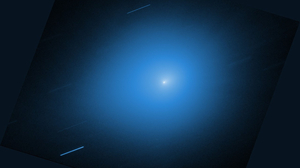
Comet Watch: Latest News as 3I/ATLAS Nears Earth
Interstellar comet 3I/ATLAS reaches its closest point to Earth on December 19. We caught up with the team at the Institute of Astrophysics in Chile.

Skywatching Tips for January 2026
What’s up in the day and night sky in January 2026, including the Quadrantids meteor shower and a Moon-Neptune-Saturn close approach.

Waning Crescent Moon
During the Waning Crescent Moon phase, the lit-up part of the Waning Moon shrinks from the Third Quarter Moon until it disappears from view at New Moon.