
When to See the Full Moon in February
February’s Full Moon is at its most illuminated at 22:09 UTC on February 1, 2026.
The Moon always appears full in the days before and after peak illumination. Full Moon is the only phase where the Moon is up all night, with moonrise and moonset occurring around sunset and sunrise.
See where the Moon is right nowMoon Phase Times February 2026
Moon phases are divided into primary and intermediate: Primary Moon phases happen at a specific moment in time, while the intermediate Moon phases occupy the times in between.
The Moon Will Cover the Sun
At New Moon on February 17, the Sun, Moon, and Earth will become perfectly aligned, producing an annular solar eclipse.

However, there is a catch. Annularity—where the Moon becomes perfectly silhouetted against the Sun—will only be visible from parts of Antarctica and the Southern Ocean. Some areas of southern Africa and the southern tip of South America will have a small partial eclipse.
IMPORTANT: Never look directly at the SunYou can see our eclipse animation for Cape Town, South Africa, which will have a 5% partial eclipse during the afternoon of February 17.
All eclipses in 2026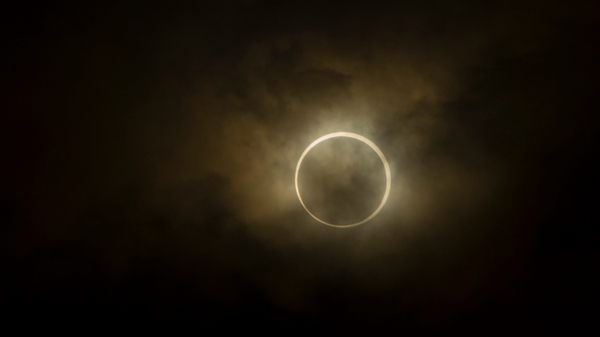
What Do We Call This Full Moon?
Common Celtic and Old English names for February’s Full Moon are Snow Moon, Storm Moon, and Ice Moon.
Some North American tribes, including various Anishinaabe communities in the Great Lakes Watershed, call it the Bear Moon to mark the time of year when bear cubs are born.
When Will Artemis II Fly Around the Moon?
The 4-person crew of Artemis II is preparing to blast off to the Moon on a 10-day flyby mission. The word “flyby” means the crew will fly around the far side of the Moon, but won’t be landing.
The four astronauts—Reid Wiseman, Victor Glover, Christina Koch, and Jeremy Hansen—went into quarantine on January 23. This is designed to help prevent them from picking up any illness before they launch.
While NASA has not specified a launch date for Artemis II, astronauts typically go into quarantine 14 days before a launch—hinting that an early February launch of the rocket is possible.
Looking ahead, the Artemis II mission will be followed by Artemis III, when humans will walk on the lunar surface in the South Pole region.

The Moon & Planets in February
Every month, the Moon completes one circuit around the sky, passing through the same 12 or so constellations that the Sun does over the course of a year.
Along the way, the Moon sweeps by each of the planets. This month’s notable close approaches are as follows:
-
February 18, Moon-Mercury-Venus: See it on our Night Sky Map for New York in the early evening sky.
-
February 19, Moon-Saturn: After sweeping past Venus and Mercury, the Moon catches up to Saturn the following evening—have a look at the view from London.
-
February 27, Moon-Jupiter: The Moon hangs close to Jupiter for most of the night. See the view from Sydney at 21:00 (9 pm) local time.
The above close approaches are visible from more or less any part of the world—we’ve included the examples from our Night Sky Map to give you a taste of the view from different cities.
Frequently Asked Moon Questions
When is the next Full Moon?
This month’s Full Moon is on February 1 at 22:09 UTC. It is the second Full Moon of 2026. The next Full Moon will be on March 3.
Does the Full Moon affect moods?
Overall, there has been little hard evidence to prove that the Moon has a measurable effect on human physiology and behavior.
When was the last Blue Moon?
The last Blue Moon was on August 19, 2024, and the next Blue Moon is on May 31, 2026.