
A Rare Super Blue Moon This Month
The Full Moon on August 31 at 01:35 UTC is a Blue Moon, and because it is near Earth in its orbit—which astronomers call perigee—it is also a Supermoon.
Combine the two, and you have a Super Blue Moon.
The Super Blue Moon in your time zoneAccording to our calculations, the last time we had a Super Blue Moon was in December 2009, and the next time will be in 9 years, in August 2032.
The next Blue Moon is in August 2024, although this is not a Supermoon.
A Big Moon Is Often Just an Illusion
Although a Super Full Moon can look up to 7% bigger than an average Full Moon, even ‘normal’ Full Moons appear big and beautiful around moonrise or moonset when they are close to the horizon.
This tricks our brains into thinking it is much bigger than it actually is: the Moon Illusion.
The Moon also appears full in the days before and after the exact time of the Full Moon, so if the weather doesn’t play along on the day or you missed moonrise, you can still catch a spectacular sight on the next day.
5 tips to get that perfect Moon photo
But Wait, Wasn’t the Last Full Moon a Supermoon?
This month’s first Full Moon—the Sturgeon Moon—was also a Supermoon, making it a Super Sturgeon Moon.
That said, there is no official rule for how close the Moon has to be to qualify as a Supermoon. At timeanddate, we define a Supermoon as a Full Moon that occurs when the center of the Moon is less than 360,000 kilometers (about 224,000 miles) from the center of Earth.
By this definition, there are typically only two Supermoons per year.
Where is the Moon right now?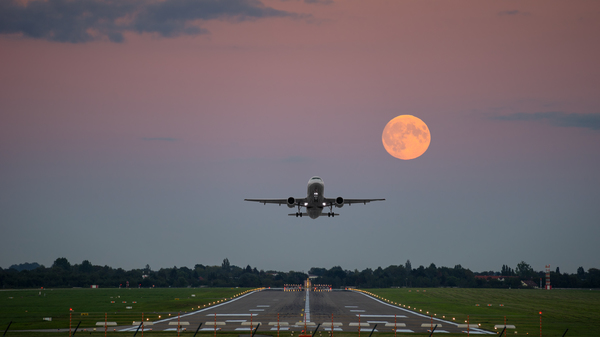
A Micro New Moon in the Middle
Inevitably, between two Full Moons, there will be a New Moon, and in this month, the Moon reached this primary phase on August 16 at precisely 09:38 UTC.
This New Moon was a Micro New Moon, meaning that the New Moon occurred near its farthest point from Earth, known as apogee.
We can’t see a New Moon as this phase is invisible for two reasons: the side of the Moon facing Earth isn’t lit up, and it rises close to the Sun, getting lost in its glare.
“It’s no coincidence that the New Moon between two Super Full Moons is a Micro Moon,” says timeanddate’s in-house astrophysicist Graham Jones.
“The Moon takes around two weeks to go from perigee to apogee. This is roughly—but not exactly—the same time it takes the Moon to go from Full to New.”
“Overall, the perigee-apogee-perigee cycle lasts around 27.55 days: this is called an anomalistic month. The Full-New-Full Moon cycle is about 29.53 days: the name for this is a synodic month,” he explains.
Our Moon is made of rock and metal