
Three “Colorful” Moons Follow Blood Moon
After March’s Blood Moon, three more “colorful” Full Moons arrive in 2026. Learn why the Pink, Blue, and Strawberry Moons don’t actually change color.
Search for a city's moon distances:
Minumum (perigee) and maximum (apogee) distances from the Moon to the Earth.
The Moon Distance Calculator calculates the approximate minumum and maximum distances from the Moon to the Earth.
The Moon's distance to Earth varies. The two extreme points of the Moon’s orbit each month are known as the lunar perigee and apogee. The table below shows the time of lunar perigee and apogee.
| Date | Local Time | Distance in km | Distance in miles |
|---|---|---|---|
| Jan 21 | 4:54 pm | 357,286 km | 222,007 mi |
| Feb 19 | 2:43 am | 361,014 km | 224,324 mi |
| Mar 19 | 12:40 am | 366,435 km | 227,692 mi |
| Apr 13 | 8:24 pm | 370,005 km | 229,910 mi |
| May 9 | 4:13 pm | 366,632 km | 227,815 mi |
| Jun 6 | 10:53 am | 361,704 km | 224,753 mi |
| Jul 4 | 5:00 pm | 358,285 km | 222,628 mi |
| Aug 2 | 2:37 am | 357,359 km | 222,052 mi |
| Aug 30 | 11:37 am | 359,199 km | 223,196 mi |
| Sep 27 | 4:12 pm | 363,453 km | 225,839 mi |
| Oct 25 | 1:48 am | 368,651 km | 229,069 mi |
| Nov 18 | 7:09 pm | 369,358 km | 229,509 mi |
| Dec 15 | 9:36 pm | 364,027 km | 226,196 mi |
| * Distances are approximate. Closest Approach (Perigee) is highlighted. | |||
| Date | Local Time | Distance in km | Distance in miles |
|---|---|---|---|
| Jan 7 | 3:06 am | 406,607 km | 252,654 mi |
| Feb 3 | 8:31 am | 406,189 km | 252,394 mi |
| Mar 3 | 12:41 am | 405,217 km | 251,790 mi |
| Mar 30 | 9:34 pm | 404,327 km | 251,237 mi |
| Apr 27 | 5:22 pm | 404,168 km | 251,139 mi |
| May 25 | 11:14 am | 404,800 km | 251,531 mi |
| Jun 22 | 1:06 am | 405,698 km | 252,089 mi |
| Jul 19 | 7:51 am | 406,215 km | 252,410 mi |
| Aug 15 | 10:24 am | 406,085 km | 252,330 mi |
| Sep 11 | 7:37 pm | 405,383 km | 251,893 mi |
| Oct 9 | 11:45 am | 404,530 km | 251,364 mi |
| Nov 6 | 7:37 am | 404,181 km | 251,147 mi |
| Dec 4 | 3:42 am | 404,660 km | 251,444 mi |
| Dec 31 | 10:53 pm | 405,632 km | 252,048 mi |
| * Distances are approximate. Furthest Apart (Apogee) is highlighted. | |||
After March’s Blood Moon, three more “colorful” Full Moons arrive in 2026. Learn why the Pink, Blue, and Strawberry Moons don’t actually change color.
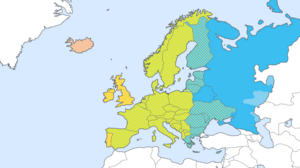
Daylight Saving Time (DST) begins across Europe early Sunday, March 29, 2026. Spain has promised a new push to end clock changes in the European Union.

Discover the phases of the Moon in March 2026. Also: How to see the total lunar eclipse on March 3, and why Artemis II won’t be flying this month.
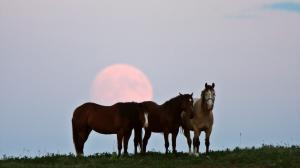
Ancient cultures gave names to the Full Moon. These names are still in use today.