
| Current Time: | Mar 23, 2026 at 5:26:03 am |
|---|---|
| Moon Direction: | ↑ 9° North |
| Moon Altitude: | -19.7° |
| Moon Distance: | 228,200 mi |
| Next Full Moon: | Apr 1, 2026, 10:11 pm |
| Next New Moon: | Apr 17, 2026, 7:51 am |
| Next Moonrise: | Today, 9:00 am |
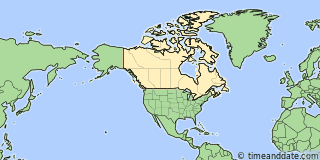

Moonrise, Moonset, and Phase Calendar for Ottawa, March 2026
| 2026 | Moonrise/Moonset | Meridian Passing | ||||||||
|---|---|---|---|---|---|---|---|---|---|---|
| Mar | Moonrise | Moonset | Moonrise | Time | Distance (mi) | Illumination | ||||
| 1 | - | 5:57 am | ↑ (296°) | 3:53 pm | ↑ (67°) | 11:14 pm | (58.4°) | 234,842 | 98.0% | |
| 2 | - | 6:20 am | ↑ (288°) | 5:09 pm | ↑ (76°) | Moon does not pass the meridian on this day. | ||||
 3 3 |
- | 6:39 am | ↑ (279°) | 6:22 pm | ↑ (85°) | 12:02 am | (52.1°) | 237,087 | 99.9% | |
| 4 | - | 6:56 am | ↑ (270°) | 7:32 pm | ↑ (95°) | 12:46 am | (45.6°) | 239,645 | 99.3% | |
| 5 | - | 7:13 am | ↑ (261°) | 8:42 pm | ↑ (104°) | 1:29 am | (39.2°) | 242,354 | 96.5% | |
| 6 | - | 7:31 am | ↑ (253°) | 9:50 pm | ↑ (112°) | 2:12 am | (33.1°) | 245,028 | 91.7% | |
| 7 | - | 7:51 am | ↑ (245°) | 10:59 pm | ↑ (119°) | 2:55 am | (27.7°) | 247,445 | 85.2% | |
| Note: hours shift because clocks change forward 1 hour. (See the note below this table for details) | ||||||||||
| 8 | - | 9:14 am | ↑ (238°) | - | 4:40 am | (23.0°) | 249,406 | 77.4% | ||
| 9 | 1:07 am | ↑ (125°) | 9:42 am | ↑ (233°) | - | 5:27 am | (19.3°) | 250,724 | 68.7% | |
| 10 | 2:12 am | ↑ (130°) | 10:17 am | ↑ (229°) | - | 6:17 am | (16.7°) | 251,265 | 59.3% | |
 11 11 |
3:12 am | ↑ (132°) | 11:02 am | ↑ (227°) | - | 7:08 am | (15.5°) | 250,949 | 49.5% | |
| 12 | 4:04 am | ↑ (133°) | 11:56 am | ↑ (228°) | - | 7:59 am | (15.6°) | 249,770 | 39.8% | |
| 13 | 4:48 am | ↑ (130°) | 12:59 pm | ↑ (231°) | - | 8:51 am | (17.2°) | 247,800 | 30.2% | |
| 14 | 5:23 am | ↑ (126°) | 2:08 pm | ↑ (236°) | - | 9:42 am | (20.1°) | 245,177 | 21.3% | |
| 15 | 5:51 am | ↑ (120°) | 3:21 pm | ↑ (243°) | - | 10:31 am | (24.4°) | 242,115 | 13.4% | |
| 16 | 6:14 am | ↑ (112°) | 4:34 pm | ↑ (251°) | - | 11:19 am | (29.7°) | 238,853 | 6.9% | |
| 17 | 6:34 am | ↑ (104°) | 5:48 pm | ↑ (261°) | - | 12:05 pm | (35.8°) | 235,675 | 2.4% | |
 18 18 |
6:53 am | ↑ (94°) | 7:04 pm | ↑ (270°) | - | 12:51 pm | (42.5°) | 232,830 | 0.2% | |
| 19 | 7:12 am | ↑ (85°) | 8:21 pm | ↑ (280°) | - | 1:38 pm | (49.5°) | 230,541 | 0.6% | |
| 20 | 7:32 am | ↑ (75°) | 9:41 pm | ↑ (290°) | - | 2:28 pm | (56.3°) | 228,941 | 3.9% | |
| 21 | 7:55 am | ↑ (66°) | 11:03 pm | ↑ (299°) | - | 3:20 pm | (62.4°) | 228,104 | 10.0% | |
| 22 | 8:23 am | ↑ (58°) | - | - | 4:17 pm | (67.5°) | 227,995 | 18.4% | ||
| 23 | - | 12:26 am | ↑ (306°) | 9:00 am | ↑ (52°) | 5:17 pm | (71.0°) | 228,519 | 28.7% | |
| 24 | - | 1:45 am | ↑ (311°) | 9:49 am | ↑ (48°) | 6:20 pm | (72.6°) | 229,544 | 40.2% | |
 25 25 |
- | 2:53 am | ↑ (312°) | 10:51 am | ↑ (48°) | 7:23 pm | (72.1°) | 230,934 | 52.1% | |
| 26 | - | 3:48 am | ↑ (310°) | 12:03 pm | ↑ (51°) | 8:23 pm | (69.6°) | 232,570 | 63.6% | |
| 27 | - | 4:29 am | ↑ (306°) | 1:21 pm | ↑ (57°) | 9:18 pm | (65.6°) | 234,374 | 74.3% | |
| 28 | - | 5:00 am | ↑ (299°) | 2:39 pm | ↑ (64°) | 10:09 pm | (60.4°) | 236,303 | 83.5% | |
| 29 | - | 5:24 am | ↑ (291°) | 3:54 pm | ↑ (73°) | 10:57 pm | (54.5°) | 238,340 | 90.8% | |
| 30 | - | 5:44 am | ↑ (282°) | 5:06 pm | ↑ (82°) | 11:41 pm | (48.1°) | 240,462 | 96.1% | |
| 31 | - | 6:02 am | ↑ (274°) | 6:16 pm | ↑ (91°) | Moon does not pass the meridian on this day. | ||||
| * All times are local time for Ottawa. Time is adjusted for DST when applicable. They take into account refraction. Dates are based on the Gregorian calendar. Illumination is calculated at lunar noon. | ||||||||||
Total Lunar Eclipse visible in Ottawa on Mar 3
Note that Daylight Saving Time starts on Sunday, March 8, 2026 at 2:00 am, and this is accounted for above.
Jan | Feb | Mar | Apr | May | Jun | Jul | Aug | Sep | Oct | Nov | Dec
Elsewhere on mungfali.galihkartiwa07.workers.dev

Three “Colorful” Moons Follow Blood Moon
After March’s Blood Moon, three more “colorful” Full Moons arrive in 2026. Learn why the Pink, Blue, and Strawberry Moons don’t actually change color.
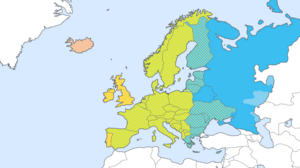
Daylight Saving Time in Europe 2026
Daylight Saving Time (DST) begins across Europe early Sunday, March 29, 2026. Spain has promised a new push to end clock changes in the European Union.

Moon Guide for March 2026
Discover the phases of the Moon in March 2026. Also: How to see the total lunar eclipse on March 3, and why Artemis II won’t be flying this month.

Waning Crescent Moon
During the Waning Crescent Moon phase, the lit-up part of the Waning Moon shrinks from the Third Quarter Moon until it disappears from view at New Moon.